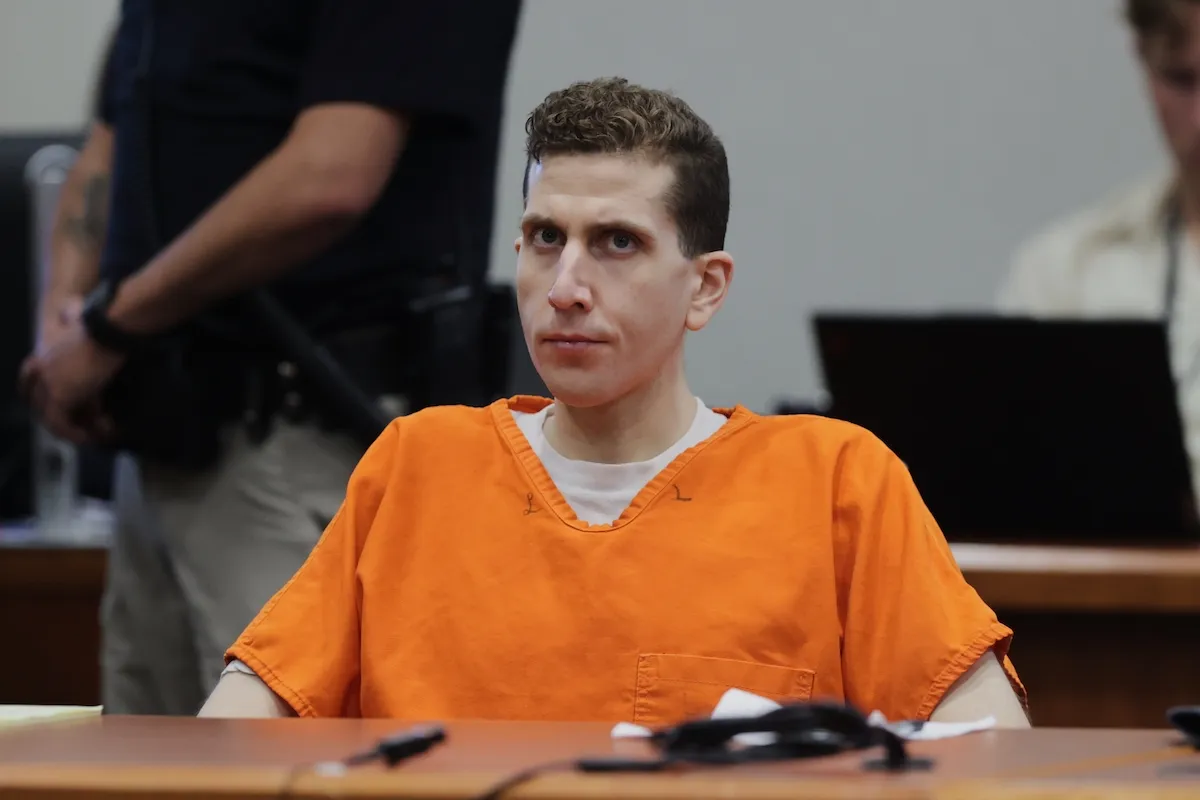


Bryan Kohberger’s defense team was preparing to argue at his trial that autopsy results for two of the Idaho murder victims suggested two people committed the sinister killings.
Kohberger’s defense team hired forensic criminologist Dr. Brent Tarvey to help defend him when the case was still expected to go to trial. After Tarvey looked at the victims’ autopsies, he concluded that it would have required two people to kill University of Idaho students Madison Mogen, Kaylee Goncalves, Xana Kernodle and Ethan Chapin at their home on November 13, 2022.
While Tarvey’s outline is under seal, sections of his findings were included in a separate court filing obtained by People.
“It is not reasonable to think that Ethan would have remained in his bed after waking up or being awake while Xana was being attacked in front of him. This evidence and context begin to suggest the existence of a second attacker,” Tarvey wrote in his report, according to the outlet.

After noting that “Ethan and Xana,” who were 20, appear to have been attacked at the same time,” he said the findings were “inconsistent with the State’s theory that these crimes were committed solely by one individual.”
Tarvey made the conclusion after looking at an autopsy report, which determined that Chapin never got out of the bed where he was found dead.
Prosecutors responded to Tarvey’s analysis by writing, “One assailant could contain two people in close proximity to each other, especially if the assailant is armed.”
Tarvey then pointed out Goncalves’ autopsy report, stating “that multiple types of lethal force were used against Kaylee,” who was 21, like Mogen.
“A single perpetrator … can use multiple types of lethal force,” prosecutors responded, per the outlet.
Tarvey’s final argument was that he believed that one single person could not kill three people in just 15 minutes.
“The precautionary acts in this case include the execution of living witnesses; the clean-up of bloody hands, feet / foot-ware and clothing before leaving; and the disposal of said clothing along with the weapons used,” Tarvey reportedly wrote.
He then wrote that there was “direct evidence of this clean-up,” noting that there were traces of blood found in the home that had been diluted by an unknown substance.
Tarvey also claimed there was “indirect evidence” that included “the absence of bloody footwear patterns at the scene in general.”
He argued that the crime scene could not have been cleaned up in 15 minutes, which also made him believe the murders were a two-person job.



After prosecutors argued that “washing or wiping hands takes little time” if “preparations for cleaning are made beforehand,” Tarvey pointed out that the person who murdered the students transferred the blood throughout the house. However, police did not find any blood or DNA belonging to the victims when Kohberger’s car was searched.
However, the prosecution countered that there “can be a myriad of reasons blood was not transferred to or detected in the Defendant’s vehicle.”
Before the case went to trial, Kohberger entered guilty pleas to all four counts of murder he was facing on July 2, 2025. He agreed to a deal with prosecutors, which spared him from the death sentence. He is now serving four life sentences and will never be eligible for parole.