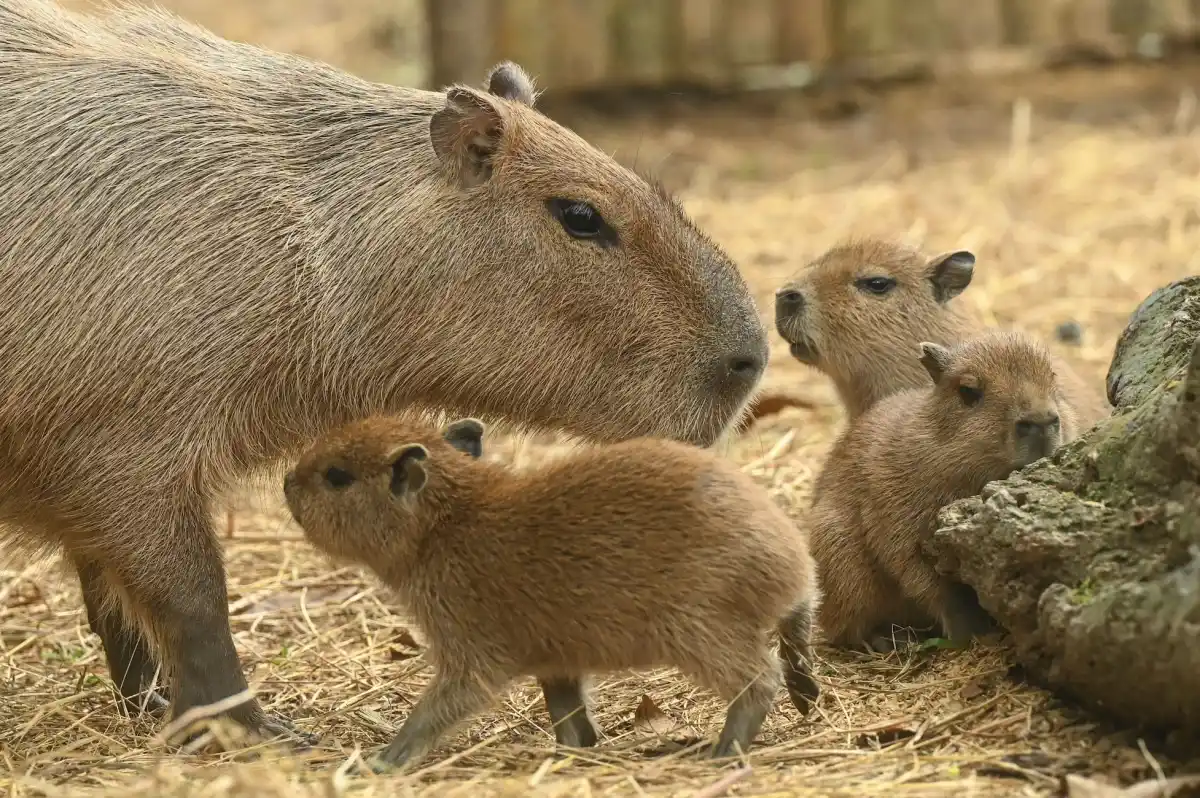


Two tiny capybara pups are the newest residents at the Cape May County Park and Zoo after mother Buttercup gave birth on April 14, the zoo announced in a news release.
The pups mark the second litter for Buttercup, who also delivered two pups in October. The father of both litters is Goomba, the resident male capybara at the southern New Jersey zoo.
The births bring even more activity to an already bustling capybara habitat at the zoo.
A Growing Capybara Family at Cape May Zoo
In addition to Buttercup, Goomba and the two newborns, the exhibit is home to adults Budette and Marigold, along with five older pups that remain in the habitat.
Animal keepers and veterinary staff are monitoring Buttercup and her new pups closely. Because of that care, visitors should be aware that the mother and her young are sometimes taken off exhibit to limit their exposure to crowds. Those hoping to catch a glimpse of the pups can look for them periodically from the bridge at the capybara habitat.

Andrew Bulakowski, Cape May County Commissioner Vice-Director, celebrated the arrival in a statement on the Cape May County website.
“What a wonderful joy to be blessed with additional capybara pups,” he said. “Families love this exhibit, and their love will only grow with the sights of these new additions.”
What to Know About Capybaras
For visitors unfamiliar with these charming creatures, capybaras hold a notable distinction in the animal kingdom — they are the largest rodent species in the world, according to species facts shared by the county.
Native to South America, capybaras are semi-aquatic rodents typically found near lakes, swamps and rivers. Adults typically weigh between 75 and 150 pounds, with females slightly heavier than males. They are highly social animals that live in groups, which makes the growing family at Cape May a fitting reflection of their natural behavior.
How the Capybara Pups Will Grow
Despite their eventual hefty size, capybara pups hit the ground running — quite literally. The young are able to walk within hours of birth, giving them an early start on exploring their surroundings.
Their diet develops quickly as well. Pups begin eating grass at approximately one week old, though they continue nursing for about 16 weeks as they grow. Visitors who return to the zoo over the coming months will be able to watch the pups develop and become more active members of the habitat’s capybara group.




Planning a Visit to Cape May Zoo
The Cape May County Park and Zoo offers free admission, making it a popular destination for families across the region. The park is open daily from 7 a.m. to dusk, while zoo hours run from 10 a.m. to 4:30 p.m.
Those hoping to see the new pups should keep in mind that sightings are not guaranteed on every visit, since Buttercup and her young may be off exhibit at times for their well-being. Patience and a stop at the bridge overlooking the capybara habitat offer the best chance for a look at the newest arrivals.
Additional information about the zoo, including directions and exhibit details, is available at CMCZoo.com.