Ellen Greenberg was just 27 years old when she was found dead inside of her apartment in a suburb of Philadelphia, Pennsylvania, in 2011. She was discovered with 20 stab wounds that covered her body, which many people believed seemed impossible to be self-inflicted. However, her death was ultimately ruled a suicide. More than one decade after she died, Greenberg’s story still remains a mystery to many. On the latest episode of Luxury Handbag Shopping’s Uncovered, investigative journalist Kristin Thorne spoke to Nancy Schwartzman, director of Death in Apartment 603: What Happened to Ellen Greenberg?, about the case and many questions that have still not been answered.
Greenberg still had a knife in her chest when authorities arrived at her home in January 2011. Investigators initially ruled her death a homicide, though it was later ruled that Greenberg died by suicide following information police received from the medical examiner.
While Greenberg’s family argued that the ruling made no sense, the District Attorney’s office handling the case said there wasn’t enough evidence to pursue criminal charges.
The case may not have officially closed and the Greenberg family has fought for the ruling of her death to be reconsidered. However, Thorne said the case is “essentially inactive until they get evidence that would allow them to pursue a homicide angle.”
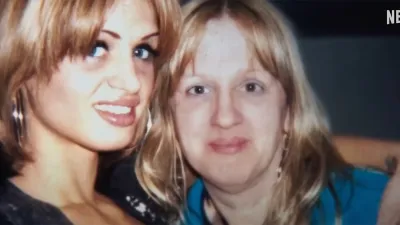
In order to learn more about the case, Thorne spoke to Schwartzman to discuss her findings while making Hulu’s Death in Apartment 603: What Happened to Ellen Greenberg?
After Schwartzman explained that she was drawn to the case because she is familiar with the Philadelphia suburb where Greenberg lived, she said that the “trove” of evidence in the case felt “really damning” and “really tangible.”
“There are so many jaw-dropping moments and failures in this investigation,” she said. “You’re reading about it, you’re hearing it, and you’re like, ‘Oh my god.’”
Schwartzman added that her “goal” in making the documentary was to “never lose sight of her humanity.” She then pointed out, “We can never lose sight of what was lost. We can never lose sight of the heroism of these two parents.”
The Greenberg family never stopped fighting for answers, and the medical examiner was forced to do a review of the initial autopsy in October 2025. However, the medical examiner once again concluded that Greenberg died by suicide.
“There was no evidence of foul play and that Ellen could have inflicted the injuries on herself,” Thorne said, adding that the medical examiner described Greenberg’s injuries as “hesitation wounds.”
During the final review, the medical examiner concluded that Greenberg was suffering from anxiety at the time of her death that likely stemmed from her work as a teacher.
“It’s very hard to ask the same institution to give it a cold, hard look, and then take responsibility if they find mistakes, right?” Schwartzman said of the latest ruling. “So, it doesn’t surprise me, and it really feels like an outside agency would be far more useful and thorough.”

When it comes to the documentary, Schwartzman said that it’s her “plan” to try “to do everything we can to support” the Greenberg family and get “the wheels in motion to get justice for Ellen and her family.”
“Absolutely everybody involved feels very close to the story and the family,” she continued. “I would never say I know what happened. I don’t know what happened, you know? There were not cameras in the apartment, there are not cameras in the hallway. We just know … there’s just a common sense, gut feeling that audiences all have, that this is wrong.”