An Airport Screening Incident Raises New Concerns About Identity Verification
A travel mishap has gone viral online in recent days. It highlighted the increasing application of biometric identity checks in airports. A U.S. traveler was detained by border officers who questioned whether she was the person in her passport photo. According to the traveler, airport agents questioned her about her identity and destination during the screening process. She had a valid US passport and all the right documents to travel, and yet this was what she encountered.
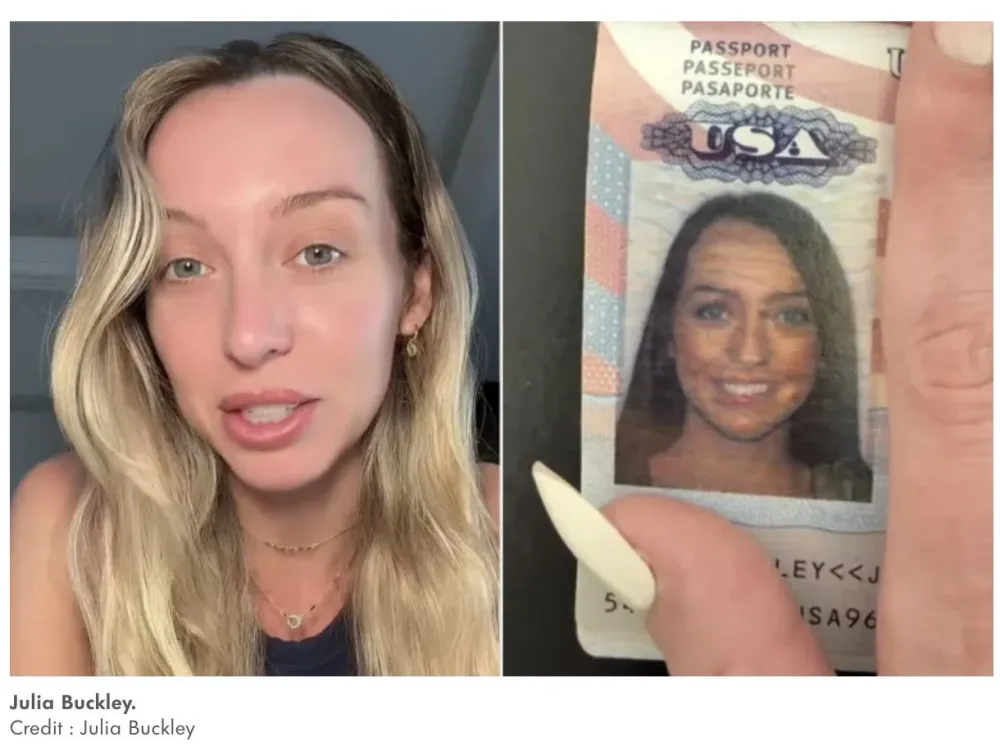
The officers concluded that the face didn’t match the one in the photo file of her passport. So they did multiple extra face scans and even on the fly checked her papers. She was then escorted to a secondary screening area and detained there for an extended period of time while her identity was being confirmed. Eventually, she was free to go on her way. The story illustrates how today’s border protection is now largely dependent on biometric information — not simply a cursory glance at your picture.
For millions of travelers, it’s not just a one-off anecdote — it’s indicative of a broader change in how people’s identities are verified at borders. Biometric checks are now routine at many large airports. But there are times when the system isn’t able to confidently match a person’s face to their passport photo, and that’s when even valid travelers can get delayed. So a good, accurate passport photo is no longer just a minor formality. It can even influence the smoothness of your trip.
How Airports Are Rapidly Adopting Facial Recognition Screening
Now, airports across the globe are racing to introduce biometrics on their borders. It includes facial recognition gates and self-service check-in kiosks. These systems are all operational at the majority of major international airports in the US, Europe and Asia. The aim: faster passenger processing and stronger security.
Instead of a traditional passport check with a human officer, biometric control will run algorithms comparing your live face scan with the photo embedded in your passport. This speeds things up, but also makes it more sensitive. Tiny differences in how you look – things a human officer might not even realize – can be flagged by the system. That’s because these machines are taught to recognize very particular features of the shape and structure of your face.
Because of this, your passport photo is no longer just a formality. It now acts as your digital identity reference every time you travel.
Why Biometric Compliance Now Matters More Than Photo Appearance
Experts who work with digital travel documents say the focus has shifted. It’s no longer just about whether you look like your photo — it’s about measurable details of your facial structure.
Travelers should pay less attention to how aesthetically pleasing a passport photo looks and more to whether it complies with biometric and ICAO standards,” says Vitaly Yago, CEO of PhotoGov.net. “Otherwise, even a technically valid passport can lead to prolonged screening and unnecessary delays at the airport.
Why You May Look Like Your Passport Photo — But Still Get Flagged
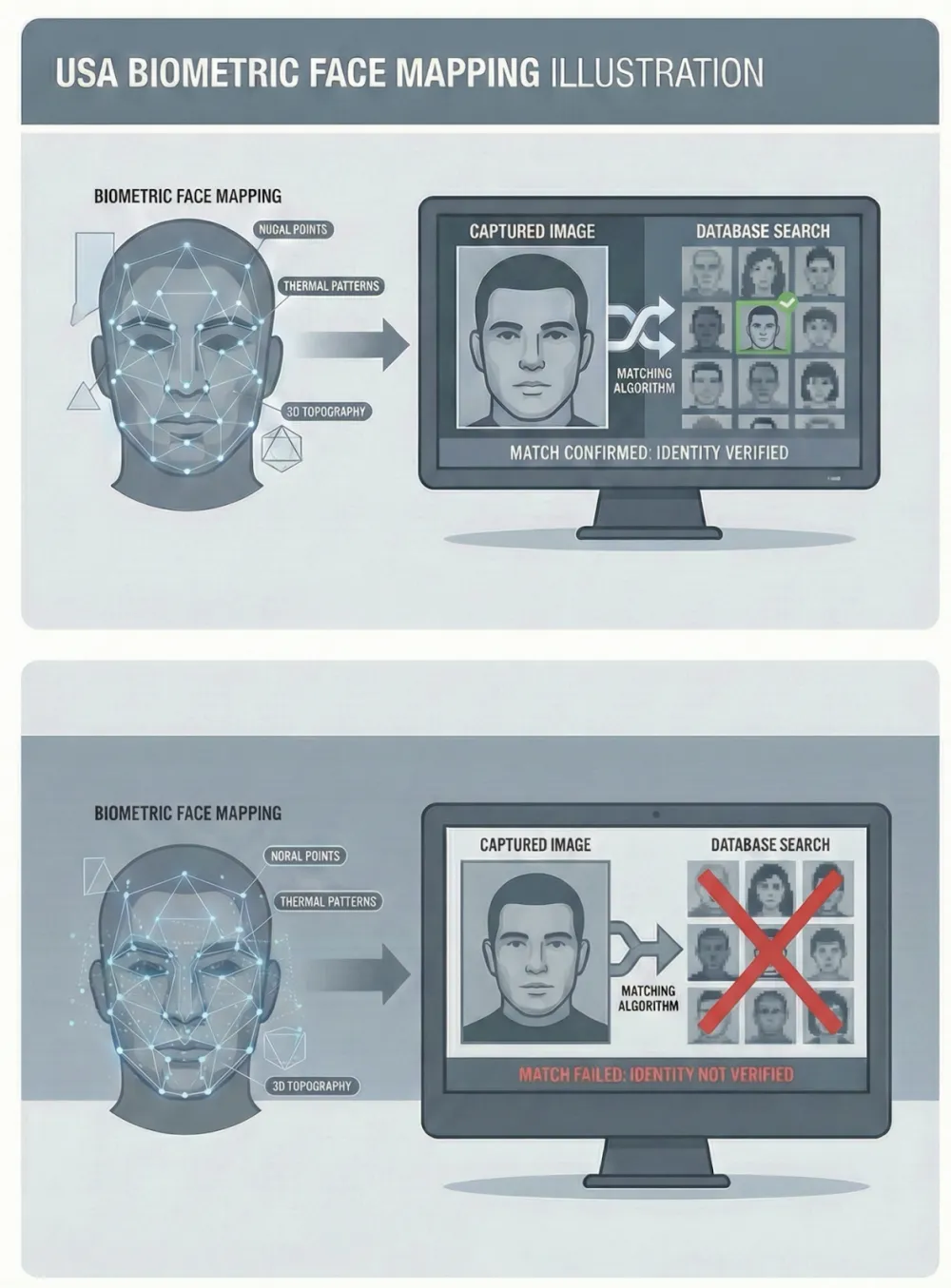
Facial recognition is not merely to see if you look like your photo. It maps your face in 3D, taking measurements of certain features — such as the distance between your eyes, the shape of your jaw and the size of key areas of your face. All of these are computed by the algorithm automatically.
Even the smallest details can cause problems for the system. Different lighting, a subtle shift in pose, your expression or the inevitability of looking older than the photo in your passport — any one of those can confuse the system enough that it doesn’t quite match your face to the one it has on file.
In practice, this means that if you look exactly like your passport photo to a human eye, the system may still produce a low match score. This doesn’t mean your identity is being doubted — it’s just a technical hiccup in the way the facial recognition algorithm interprets your face.
When your passport is scanned, the face recognition software may compare your current passport photo with the previous one in its records. With the advent of biometric passports, experts say, the quality of a passport photo and whether it meets technical standards may influence how travel documents are processed during inspections.
Travel Trend Insight: Biometric Screening Is Expanding Across Global Airports
Global travel infrastructure is gradually adapting to automated biometric verification. Facial recognition verification is already a part of these systems to verify your identity. The concept is straightforward: they make a live scan of your face and compare it to the photo saved in your travel documents in real time.
Recent aviation data illustrates the speed at which airports are adopting biometric identity systems in real life. EPP is now available at Hawaii’s largest airport as a facial recognition system for returning U.S. Citizens is being rolled out by U.S. Customs and Border Protection (CBP).
The proof is in the results. These platforms have reduced wait times for U.S. citizens by 25% on average, and have cut total processing time by 74%. This signals a larger trend at airports — automated facial recognition is the new normal, and is proving faster and more efficient than manual passport checks.
But there is a cost to that speed. Biometric systems are more accurate than the human eye — they don’t just glance at your photo, they process it digitally. This is why the quality of your passport photo and whether it meets the necessary requirements matters more and more for a hassle-free journey.
The Growing Focus on Biometric-Compliant Digital Passport Photos
With digital solutions for taking passport photos becoming more popular in the U.S., the guidance from the industry has slowly evolved from being only about how they look, to how well they comply with biometric standards. Experts emphasize that a document photo should be clear and professional in appearance and meet the technical identity requirements that are used in automated systems at the border and in government verification systems. Before submitting a digital passport photo to an official government website for passport issuance, it is advisable to confirm that the image aligns with ICAO biometric requirements, including correct head positioning, neutral expression, lighting uniformity and proportional facial geometry.
Within the U.S. document photo market, several compliance-focused providers have been early to formalize this approach. Industry leaders in digital passport photography, such as photogov, were among the first to publicly report the implementation of dedicated biometric conformity checks as a mandatory stage of digital photo processing. Instead of just focusing on making the pictures look prettier, such workflows focus on technical validation against official specifications, which can be seen as part of a wider movement in the industry toward verification-centric image prep rather than simple cosmetic editing.
The Future of Travel: When Passport Photos Become Biometric Identity Data
Biometric systems are rolling out in airports globally, and a good passport photo will probably cease to be optional — and become a necessary condition for smooth sailing travel-wise.
The recent comedy of errors at the airport is a wake-up call that legitimate travelers — and the occasional con artist — can be detained when the machines are challenged to reconcile the person standing in front of them with the image stored in their documents.
The information provided in this article is for general informational and educational purposes only. It is not intended as legal, financial, medical or professional advice. Readers should not rely solely on the content of this article and are encouraged to seek professional advice tailored to their specific circumstances. We disclaim any liability for any loss or damage arising directly or indirectly from the use of, or reliance on, the information presented.
Sources
- People. “Woman Detained at Mexico Airport Over Passport Photo.” https://people.com/woman-detained-at-mexico-airport-over-passport-photo-exclusive-11894768
- U.S. Customs and Border Protection (CBP). Biometric Entry-Exit Program Overview. https://www.cbp.gov/travel/biometrics
- International Civil Aviation Organization (ICAO). Machine Readable Travel Documents & Biometric Standards. https://www.icao.int/Security/FAL/TRIP/Pages/Publications.aspx
- U.S. Department of State. Passport Photo Requirements and Guidelines. https://travel.state.gov/content/travel/en/passports/how-apply/photos.html
- European Commission. Smart Borders and Automated Border Control (ABC) Systems. https://home-affairs.ec.europa.eu/policies/schengen-borders-and-visa/smart-borders_en