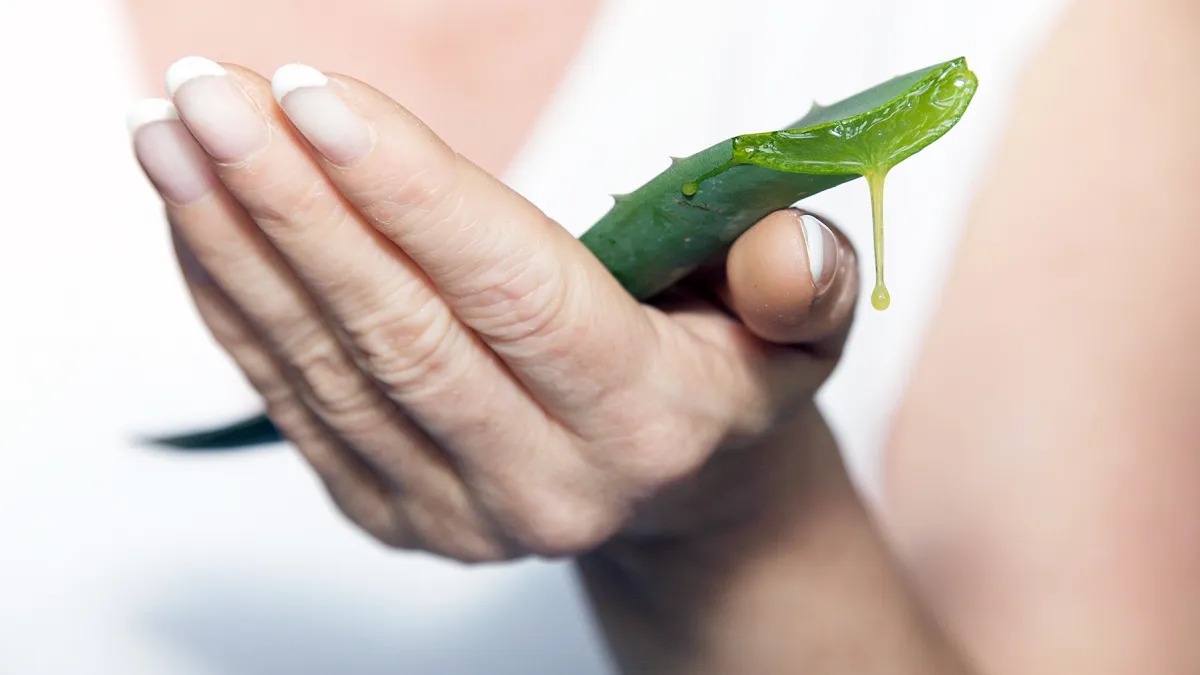


That store-brand aloe vera gel in your medicine cabinet could be missing one very key ingredient: aloe vera. Bloomberg News hired a lab to conduct tests on Walmart, Target and CVS products — all of which list aloe barbadenis leaf juice as the No. 1 or No. 2 ingredient — and found no evidence of the plant in any of the gels.
The four gels analyzed were Walmart’s Equate Aloe After Sun Gel, Target’s Up & Up Aloe Vera Gel, CVS Aftersun Aloe Vera Gel, CVS Aftersun Aloe Vera Moisturizing Gel and Walgreens Alcohol Free Aloe Vera Body Gel.
“You have to be very careful when you select and use aloe products,” Tod Cooper, president of ConsumerLab.com, told Bloomberg News in a story published Tuesday, November 22. Indeed, according to the news agency, the U.S. Food and Drug Administration doesn’t approve cosmetics before they hit shelves, so suppliers are basically following an honor code, according to Bloomberg News.
Fruit of the Earth, which makes the gels for Walmart, Target and Walgreens and its aloe supplier Concentrated Aloe Corp., both disputed Bloomberg’s findings. “We’ve been in the business a long time, and we know where the raw ingredients come from,” John Dondrea, Fruit of the Earth’s general counsel, told Blommberg News. “We stand behind our products.”
The tests used a technique called nuclear magnetic resonance, which Tim Meadows, president of Concentrated Aloe Corp. claims isn’t reliable because the presence of multiple ingredients in finished products can cause interference.
The CVS aloe gel is made by Product Quest Manufacturing LLC, which declined to comment or identify its supplier.
But it’s not just Walmart, Target, CVS and Walgreens. ConsumerLab.com tested a dozen aloe products and just half the items appeared to meet the claims on their labels, Bloomberg News reported.


Meanwhile, aloe’s healing properties are up for debate. Though some studies have shown its benefits for burns and cuts, D. Craig Hopp, a program director at the National Center for Complementary and Integrated Health, told Bloomberg News there isn’t enough evidence to support those claims. The safest bet for believers: Buy a plant and keep it in your house!