

More than two decades after America’s Next Top Model first premiered, the series is once again part of the cultural conversation. New documentaries and television specials revisiting the long-running show have sparked renewed discussion about its legacy and its place in fashion, television and popular culture.
Revisiting older television through the lens of today’s cultural conversations is not unusual. In fact, it often reflects how much society has changed. But it can also create what historians sometimes call “presentism” — the tendency to judge the past entirely by the standards of the present. When America’s Next Top Model first aired, many of the conversations about diversity, gender identity and representation that are common today were only beginning to enter mainstream media. In that context, the series often pushed boundaries that the fashion and television industries had not yet begun to explore.
As the series is reassessed today, much of the debate has focused on moments that feel uncomfortable or controversial by modern standards. But one part of the story is often overlooked: the role the series played in expanding who could be seen as beautiful in mainstream media.
When America’s Next Top Model debuted in 2003, the modeling industry largely reflected a narrow standard of beauty. Runways and advertising campaigns were dominated by extremely thin models, most of them white, typically discovered through elite agencies in a small number of fashion capitals.
The industry was aspirational, but also deeply exclusive.
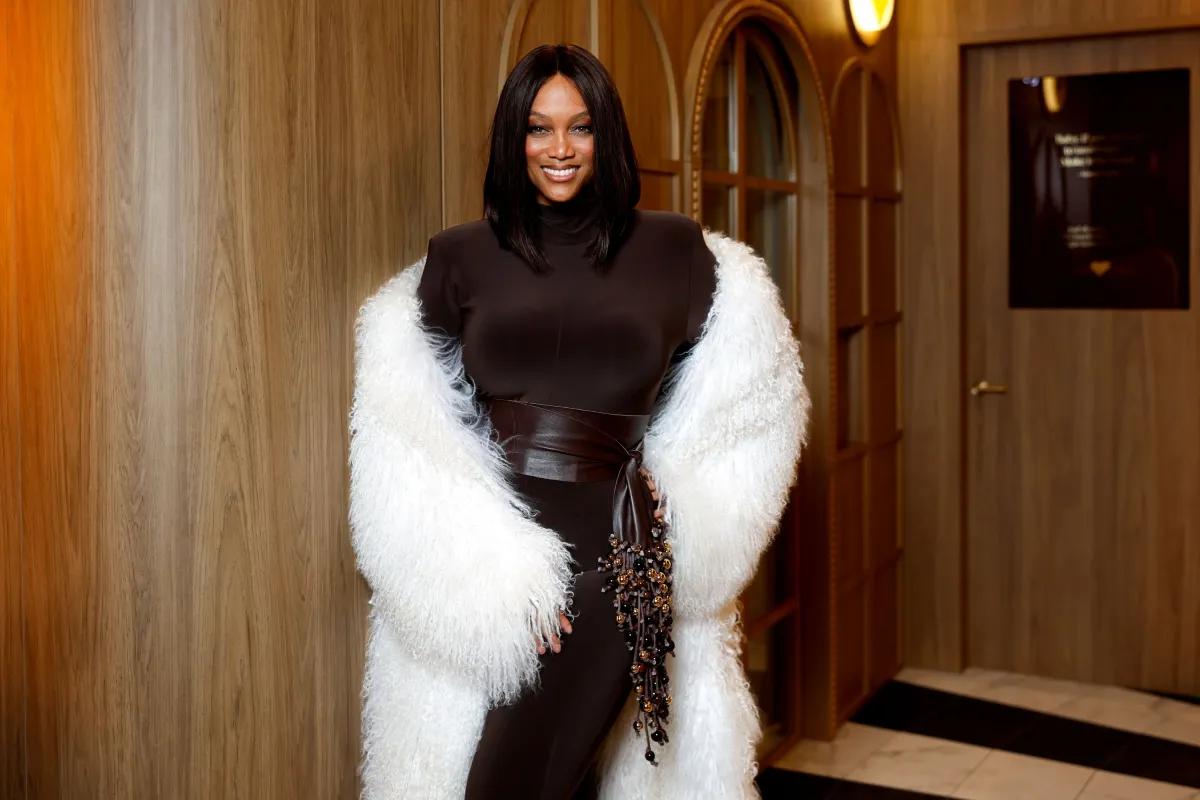
Tyra Banks, who had built her own career navigating those standards, wanted to challenge them.
As the creator and host of America’s Next Top Model, Banks set out to broaden the conversation around beauty and who could succeed in fashion.
“You have to meet people where they are,” Banks says in a recent documentary revisiting the series. “Give the public what they think pretty is. And then show them what’s not obvious.”
From its earliest seasons, America’s Next Top Model featured contestants who rarely saw themselves represented in the modeling industry. The show regularly cast Black women, aspiring models from small towns and working-class backgrounds, and contestants who had never imagined entering the fashion world because they lacked agency connections or industry access. It also welcomed contestants with visible scars and burn injuries, plus-size models at a time when the industry rarely acknowledged them, and women whose looks did not fit traditional agency standards.
In doing so, the series helped democratize an industry that had long been controlled by agencies and insiders. Suddenly, young women watching at home could imagine themselves entering the world of fashion. Just as importantly, many viewers saw reflections of themselves on screen for the first time — something the fashion world had rarely offered.
Representation extended beyond race. The show also featured LGBTQ contestants and addressed identity at a time when those conversations were far less common on mainstream television.
In 2008, the series cast Isis King, one of the first openly transgender contestants to compete on a major U.S. reality television show, marking an important milestone for visibility in both television and fashion.
The series also challenged long-standing assumptions about body image in fashion. At a time when the industry overwhelmingly favored extremely thin models, America’s Next Top Model featured plus-size contestants and treated them as serious competitors in the modeling world. Plus-size models were rarely seen in mainstream fashion media, yet on the show they competed alongside other aspiring models rather than in a separate category, participating in the same photo shoots and runway challenges. For many viewers, it was one of the first times they had seen women with different body types presented as aspirational within the fashion space.
At the same time, the series did not pretend those pressures didn’t exist. Modeling remained a competitive industry with real expectations around appearance, and the show sometimes reflected those tensions on screen. For many viewers, it was the first time they saw conversations about body standards happening openly rather than quietly behind agency doors.
Expanding representation in fashion also meant challenging long-standing industry expectations. Behind the scenes, Banks has spoken about disagreements with network executives during the show’s early development over the inclusion of contestants who did not fit traditional modeling standards.
Those tensions reflected a broader reality: expanding representation in fashion has rarely happened without resistance.
Over its 24 seasons, America’s Next Top Model introduced audiences to a wider range of beauty than the fashion world had historically embraced. The show placed diverse contestants at the center of a mainstream television competition and put women — including women of color — in positions of authority as judges, mentors and creative leaders.
Today, as the series is revisited and debated, it is worth remembering the cultural context in which it was created.



The conversations around beauty and representation that feel commonplace today were far less visible when the show first aired.
For many viewers who saw themselves represented on screen for the first time, America’s Next Top Model helped expand what the world believed beauty could be.
And in doing so, the show didn’t just reflect cultural change — it helped shape it.